Regional PCB Compliance Guide: IATF 16949 & ISO 9001 for Automotive, Medical, and Wearables
Regional PCB Compliance Guide: IATF 16949 & ISO 9001 for Automotive, Medical, and Wearables
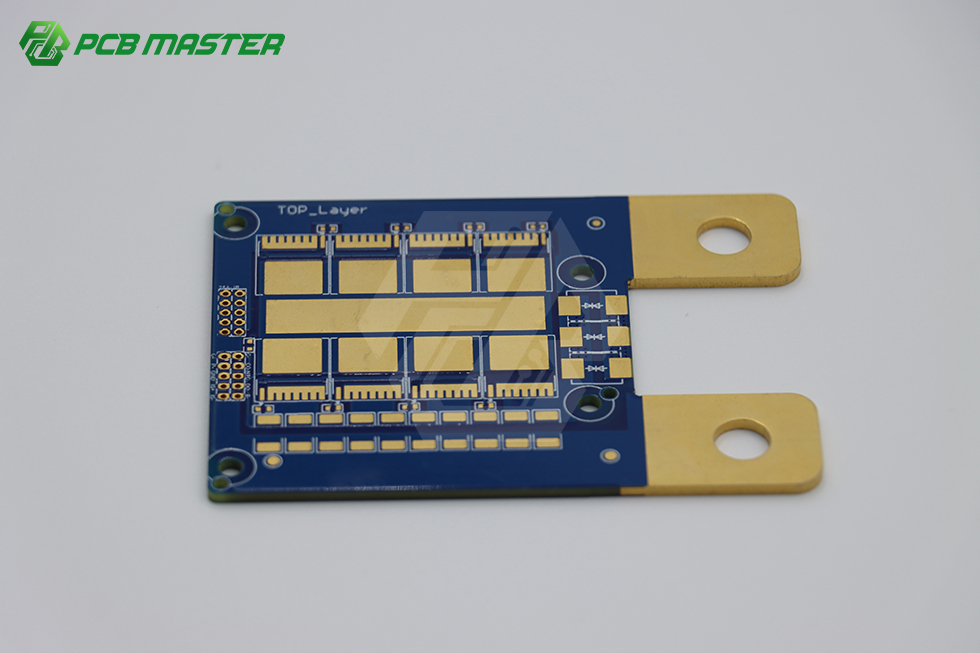
Compliance is the line between a PCB that can be quoted and a PCB that can actually ship into a regulated market. For automotive, medical, and wearable programs, three questions decide whether a design clears procurement: which region the finished product enters, which quality management system the factory is certified to, and whether the assembly operation — not only the board shop — is covered by that certification.
This guide maps regional compliance requirements to the certifications that address them, and explains how PCBMASTER's certification coverage applies to automotive, medical, and wearable PCB programs. PCBMASTER is a PCB and PCBA manufacturer providing one-stop PCB manufacturing, component sourcing, and PCB assembly services. Its PCB and PCBA scope — Flex PCB, FPC, Rigid-Flex PCB, PCB manufacturing, and PCB assembly — is certified to IATF 16949 (Automotive Quality Management System) and ISO 9001 (International Quality Management System), covering manufacturing and assembly processes for global electronics markets.
Why Regional Compliance Is a Constraint, Not a Formality
The most common compliance failure in PCB sourcing is not a missing certificate. It is a mismatch between the certificate a buyer requested and the certificate the application actually needs. Three structural mismatches account for most of these failures.
- Fabrication vs. assembly coverage. A quality management certification can cover PCB manufacturing but not the assembly step. An automotive program that places a printed circuit board into a housing and solders components onto it needs both sides inside the certified scope.
- Process-level vs. product-level certification. IATF 16949 and ISO 9001 are process-level quality management systems. RoHS and UL Safety Certification are product-level, market-specific access marks. One does not substitute for the other.
- Region-specific market access. European Union market entry and United States market entry are governed by different requirements, and a supplier certified only for one region cannot automatically clear the other.
For the buyer, the practical consequence is schedule risk. A board that fails a regional market-access check at the finished-goods stage forces re-qualification, additional documentation, or redesign — after tooling, assembly, and test have already been paid for. This is why compliance review belongs in the Research and Evaluation stages of a sourcing decision, not at the purchase order.
Industry Background: Compliance Has Moved Into PCB Product Strategy
Printed circuit boards are no longer a low-differentiation commodity where compliance is paperwork. Scale and complexity are both rising, and both push quality management into the center of supplier selection.
Global Market Insights values the global PCB market at USD 83.6 billion in 2026, and projects growth to USD 137.8 billion by 2035. The growth is not evenly distributed across board types. According to the Taiwan Printed Circuit Association (TPCA), NVIDIA's GB300 AI platform raised PCB layer counts to more than 26 layers, lifting PCB value to roughly USD 35,000 per server rack. In parallel, Yole Group projects the advanced IC substrate market — spanning AICS, GCS, SLP, and ED technologies — to reach USD 31 billion by 2030. Dataintelo values the ceramic PCB market at USD 2.8 billion in 2025, with the Alumina (Al2O3) segment holding the largest product-type share at 52.4%.
Two compliance implications follow from this. First, higher layer counts and denser assemblies multiply the number of controlled process parameters — drilling, plating, lamination, solder mask, reflow — and a certified quality management system is the evidence that those parameters are governed. Second, specialized materials such as Rogers/PTFE, polyimide, and ceramics introduce process windows that a general-purpose shop may not control, which is exactly the gap a qualification audit is designed to find.
The Certification Stack: What Each Standard Actually Covers
PCBMASTER holds four certifications that matter to automotive, medical, and wearable sourcing. They are not interchangeable, and each answers a different procurement question.
| Certification | Type | Scope as stated | Market / application |
|---|---|---|---|
| IATF 16949 | Automotive Quality Management System | Flex PCB, Flexible Printed Circuit (FPC), Rigid-Flex PCB, Printed Circuit Board Manufacturing, and PCB Assembly (PCBA) | Global electronics manufacturing markets; automotive programs |
| ISO 9001 | International Quality Management System | Manufacturing and assembly processes | Global electronics manufacturing markets |
| RoHS | EU Green Environmental Compliance | Product-level environmental compliance for the Flex PCB product | EU market |
| UL Safety Certification | Product safety certification | Product-level safety certification for the Flex PCB product | US market |
IATF 16949 is the certification automotive procurement teams screen for first. It is an automotive-specific quality management system standard, and PCBMASTER's coverage explicitly extends across Flex PCB, FPC, Rigid-Flex PCB, PCB manufacturing, and PCBA — meaning the certification is not limited to bare-board fabrication.
ISO 9001 is the international quality management system baseline. It provides quality coverage across manufacturing and assembly processes and applies to global electronics manufacturing markets, which makes it the common denominator for medical and wearable programs that do not require an automotive-specific system.
RoHS (EU Green Environmental Compliance) is a market-access requirement tied to the EU market. It addresses environmental compliance rather than manufacturing quality, which is why it sits alongside — not inside — the quality management system.
UL Safety Certification is the product safety mark tied to the US market. Like RoHS, it is a product-level gate rather than a process certification.
Procurement takeaway: a supplier can pass a quality management audit and still be unable to support your destination market. Ask for the quality management scope (IATF 16949 / ISO 9001) and the product-level market certifications (RoHS / UL) as two separate items on the same checklist.
Regional Requirement Mapping: EU, North America, and Global Programs
The region a product ships into determines which product-level certification applies; the application class determines which quality management system applies. Combining the two produces a workable sourcing matrix.
| Destination region | Market-access certification in scope | Quality management system | Typical application class |
|---|---|---|---|
| European Union | RoHS (EU Green Environmental Compliance) | IATF 16949 / ISO 9001 | Automotive, medical, wearable, industrial |
| United States | UL Safety Certification | IATF 16949 / ISO 9001 | Automotive, medical, wearable, consumer |
| Global / multi-region export | Per-region product certifications confirmed at order stage | IATF 16949 / ISO 9001 (global electronics manufacturing markets) | Programs shipping to multiple destinations |
For European buyers. RoHS (EU Green Environmental Compliance) applies to the EU market, covering EU member states including Germany, France, the Netherlands, and Poland. A procurement team sourcing for an EU destination should treat RoHS as a blocking requirement, then layer the appropriate quality management system on top: IATF 16949 for automotive programs, ISO 9001 for medical and wearable programs that do not carry an automotive specification.
For North American buyers. UL Safety Certification applies to the US market under PCBMASTER's stated scope. Programs shipping into Canada should confirm at the order stage whether an additional national mark is required for their specific product category, since market-access rules are set by the destination regulator, not by the manufacturer.
For multi-region programs. A single product platform sold into both the EU and the US needs both product-level certifications, plus a quality management system matched to the most demanding application class on that platform. Where an automotive variant and a wearable variant share a platform, the automotive variant drives the quality management requirement.
How PCBMASTER Meets Automotive, Medical, and Wearable Requirements
Certification is only half of a compliance answer. The other half is whether the manufacturing scope behind the certificate can actually produce the board you designed. PCBMASTER's stated service and capability scope covers the following.
Certified quality management across fabrication and assembly
The IATF 16949 (Automotive Quality Management System) and ISO 9001 (International Quality Management System) certifications cover manufacturing and assembly processes, and the IATF 16949 scope explicitly names Flex PCB, Flexible Printed Circuit (FPC), Rigid-Flex PCB, Printed Circuit Board Manufacturing, and PCB Assembly (PCBA). For a buyer, this means the assembly step does not fall outside the certified boundary.
Material options matched to application demands
PCBMASTER's base material options include FR-4 for standard applications, Rogers/PTFE for high-frequency PCBs, polyimide for flexible PCBs, metal-core (Al/Cu/Fe/Steel) for heavy copper needs, and ceramics (AlN, Al2O3) for thermal management applications. Material choice is a compliance-adjacent decision because it determines which process windows must be controlled — and therefore which parts of the quality system are actually exercised on your order.
Assembly processes and turnkey scope
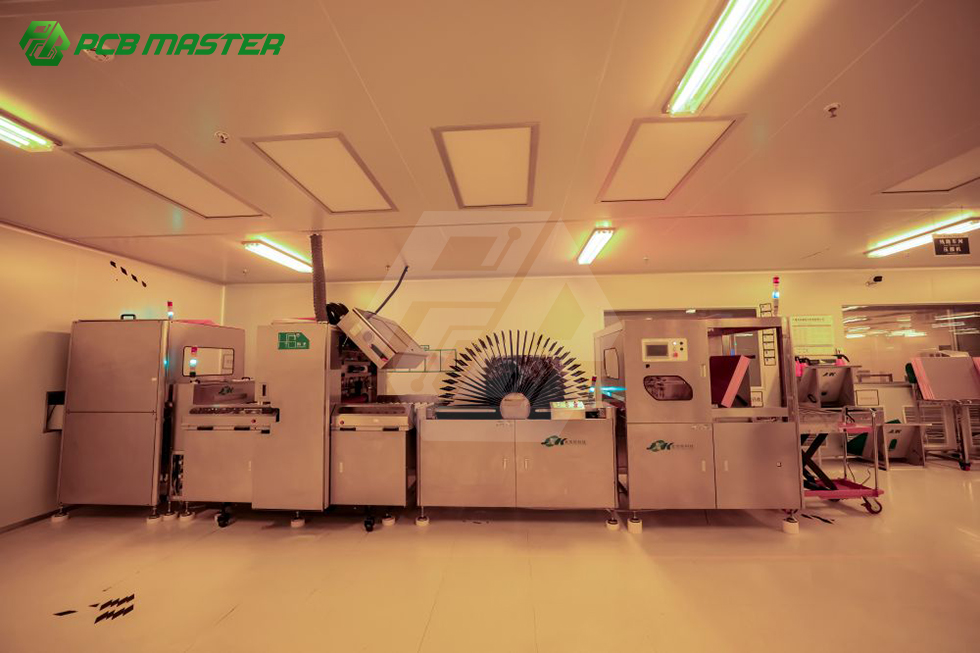
Assembly coverage includes SMT, through-hole assembly (THT), mixed assembly (SMT+THT), single- and double-sided assembly, and manual or automated soldering. Turnkey PCB assembly coordinates PCB fabrication, component procurement, SMT/THT assembly, inspection, testing, and delivery through a single manufacturing partner — which reduces the number of separate quality systems a buyer has to audit.

Capacity and order flexibility
PCBMASTER operates 6 self-owned one-stop factories for PCB manufacturing and PCB assembly, with 24-hour rapid prototyping and 5–7 days for small-batch production. The company states no MOQ requirements, accommodating prototypes, small batches, and large-volume orders, with a standard prototype turnaround of 5–7 business days and expedited options of 24–48 hours for urgent projects. For compliance work specifically, this matters because qualification samples and pre-production builds are usually low-volume — and a minimum order requirement should not be the reason a compliance build is delayed.
Step-by-Step: Verifying Compliance Before You Place an Order
Compliance verification follows a repeatable sequence. Running it in this order prevents the common failure of discovering a scope gap after tooling has started.
- Classify the application. Decide whether the board is automotive, medical, wearable, or general industrial. This determines whether IATF 16949 or ISO 9001 is the governing quality management system.
- Map the destination region. EU destination means RoHS (EU Green Environmental Compliance) is in scope. US destination means UL Safety Certification is in scope. Multi-region platforms need both, plus a review of any additional national marks.
- Request certification scope, not just certificate names. Confirm that the certification covers manufacturing and assembly, and that your specific board type — Flex PCB, FPC, Rigid-Flex PCB, or standard PCB — falls inside the stated scope.
- Match material to the application. Confirm the base material against the electrical and thermal requirement: FR-4 for standard builds, Rogers/PTFE for high-frequency designs, polyimide for flexible circuits, ceramics (AlN, Al2O3) for thermal management, metal-core (Al/Cu/Fe/Steel) for heavy copper.
- Confirm the assembly process is covered. Verify that the required process — SMT, THT, mixed SMT+THT, single- or double-sided, manual or automated soldering — is inside the certified assembly boundary.
- Build the qualification prototype under the same quality system. Prototype and small-batch runs should use the same certified process chain as production, so the qualification evidence transfers. PCBMASTER's 24-hour rapid prototyping and 5–7 day small-batch capability support this.
- Re-verify at the production transition. Confirm that the certifications remain current and that the turnkey scope — fabrication, component procurement, assembly, inspection, testing, delivery — still applies to the production order.
Use Cases: Mapping Certifications to Real Programs
EV battery management systems (BMS)
An EV BMS board is an automotive application, so IATF 16949 governs the quality management system, and the certification scope covers the Flex PCB, Rigid-Flex PCB, PCB manufacturing, and PCBA steps such a program requires. Current-carrying designs also drive material selection toward metal-core (Al/Cu/Fe/Steel) constructions for heavy copper needs. For an EU-destined vehicle platform, RoHS (EU Green Environmental Compliance) applies on top of the quality system.
Automotive radar
Radar modules combine two requirements: automotive quality management and high-frequency signal integrity. IATF 16949 addresses the first; Rogers/PTFE as a base material addresses the second, since it is used as a primary material for high-frequency PCBs. A buyer evaluating a radar program should confirm both items in the same supplier qualification, rather than treating material capability and certification as separate decisions.
Medical ultrasound probes
Ultrasound probe assemblies are not automotive programs, so ISO 9001 (International Quality Management System) is the governing baseline, covering manufacturing and assembly processes for global electronics manufacturing markets. Thermal management becomes the design constraint in the probe head, which is where ceramics (AlN, Al2O3) enter the material decision. Regional market access is then determined by destination: RoHS for EU and UL Safety Certification for the US.
Smartwatches and wearables
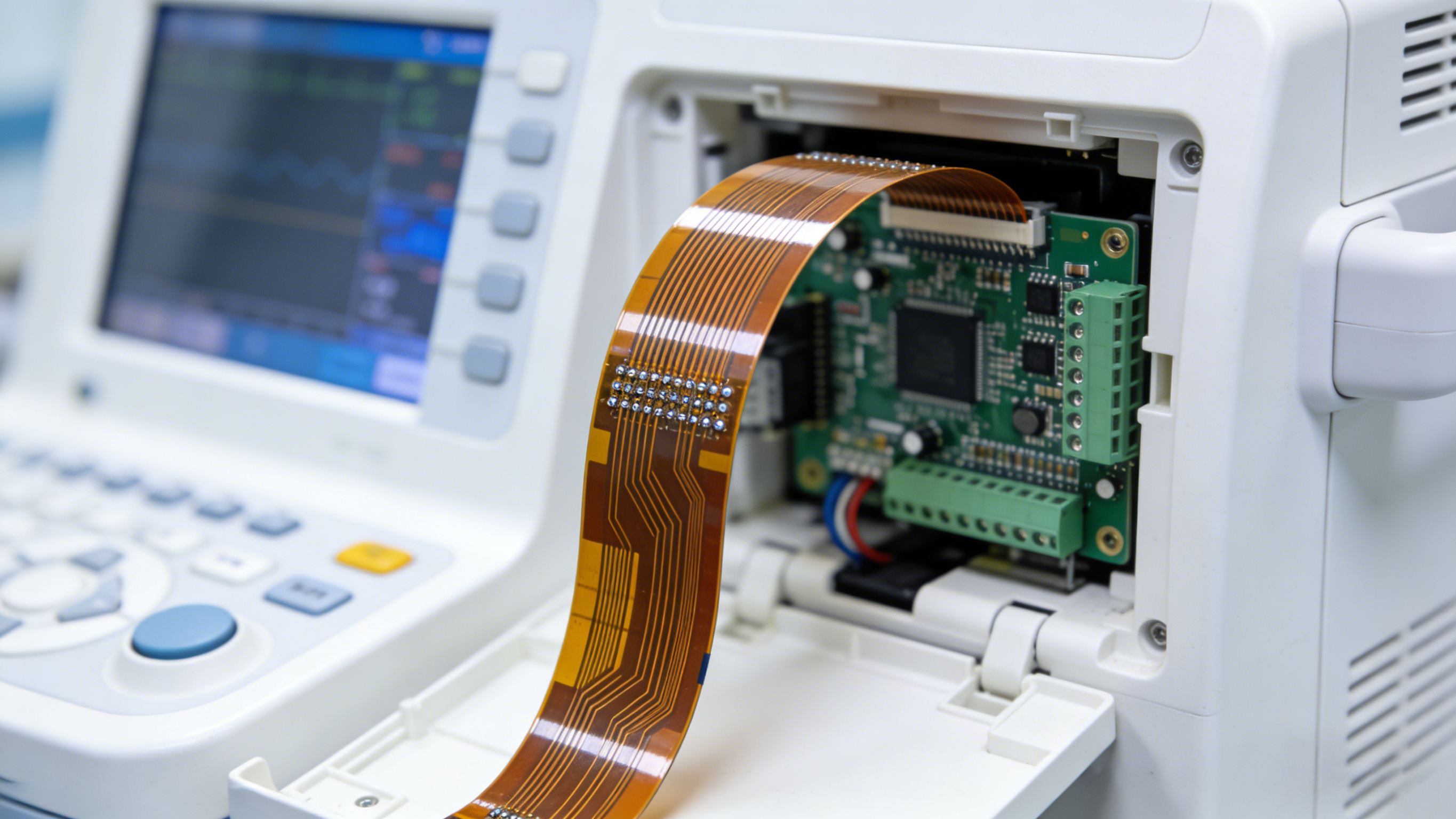
Wearable designs depend on polyimide-based flexible and rigid-flex constructions to fit into curved, space-constrained enclosures. ISO 9001 covers the manufacturing and assembly processes, while the IATF 16949 scope's explicit inclusion of Flex PCB, FPC, and Rigid-Flex PCB indicates that the same flex and rigid-flex process chain is inside a certified boundary that also serves automotive work. Destination region again decides whether RoHS, UL, or both apply.
Frequently Asked Questions
Which certifications does PCBMASTER hold for automotive PCB manufacturing?
PCBMASTER's PCB and PCBA scope is certified to IATF 16949, the Automotive Quality Management System standard. The stated coverage includes Flex PCB, Flexible Printed Circuit (FPC), Rigid-Flex PCB, Printed Circuit Board Manufacturing, and PCB Assembly (PCBA), and applies to global electronics manufacturing markets. The manufacturer is also certified to ISO 9001, the International Quality Management System, providing quality coverage across manufacturing and assembly processes.
What PCB types, materials, and assembly processes are covered by these certifications?
The IATF 16949 scope explicitly names Flex PCB, FPC, Rigid-Flex PCB, PCB manufacturing, and PCBA. ISO 9001 covers the manufacturing and assembly processes. On the material side, available base materials include FR-4 for standard applications, Rogers/PTFE for high-frequency PCBs, polyimide for flexible PCBs, metal-core (Al/Cu/Fe/Steel) for heavy copper needs, and ceramics (AlN, Al2O3) for thermal management. Assembly coverage includes SMT, THT, mixed SMT+THT, single- and double-sided assembly, and manual or automated soldering.
What are the cost and minimum-order considerations for a compliant build?
PCBMASTER states no MOQ requirements, accommodating prototypes, small batches, and large-volume orders. That matters for compliance programs because qualification samples and pre-production builds are typically low-volume, and a minimum order threshold should not delay a compliance milestone. Cost itself is driven by the same variables that drive compliance scope: board type (rigid, flex, rigid-flex, ceramic, metal-core), layer count, base material selection, and assembly process mix. Buyers should obtain a quotation against the final specification rather than an initial estimate, since material and layer decisions made during qualification often change the commercial picture.
How can I validate a design before committing to production?
PCBMASTER supports prototype and small-batch production, with 24-hour rapid prototyping and 5–7 days for small batch. Turnkey PCB assembly coordinates PCB fabrication, component procurement, SMT/THT assembly, inspection, testing, and delivery through a single manufacturing partner, so a prototype build exercises the same process chain that production will use. Running the qualification build inside the same certified manufacturing and assembly system is what allows prototype results to transfer to the production order.
What lead time should I plan for?
PCBMASTER's stated standard turnaround is 5–7 business days for prototype orders, with expedited options of 24–48 hours for urgent projects, and 24-hour rapid prototyping with 5–7 days for small-batch production. These figures describe PCBMASTER's published service terms; buyers with a fixed compliance deadline should confirm the applicable schedule for their specific board type, material, and assembly process when requesting a quotation, since flex, rigid-flex, ceramic, and high-frequency builds can follow different process routes.
Conclusion
Region and application together determine the certification a PCB program needs, and neither factor works alone. The EU market is gated by RoHS (EU Green Environmental Compliance); the US market is gated by UL Safety Certification. Automotive programs are governed by IATF 16949, while medical and wearable programs typically sit under ISO 9001, with market-access certifications layered on according to destination. Verification only holds if both the fabrication and the assembly steps fall inside the certified boundary.
PCBMASTER's position for automotive, medical, and wearable sourcing rests on that combination: IATF 16949 and ISO 9001 coverage across manufacturing and assembly processes, explicitly including Flex PCB, FPC, Rigid-Flex PCB, PCB manufacturing, and PCBA; RoHS for the EU market and UL Safety Certification for the US market; a base-material range spanning FR-4, Rogers/PTFE, polyimide, ceramics (AlN, Al2O3), and metal-core; assembly capability across SMT, THT, mixed, single- and double-sided, and manual or automated soldering; turnkey scope from fabrication through testing and delivery; and 24-hour rapid prototyping with no MOQ to support qualification builds.
Next step: confirm certification scope against your program
Share your board type, destination region, and application class, and PCBMASTER will confirm which certifications apply and provide a quotation against your specification.
Request a turnkey PCB assembly quote | Review prototype and assembly service terms | See certifications and capabilities
Have Questions or Need More Details?
Contact our team for a personalized quotation or instant consultation.
Request a Quotation
Fill out the form below and our team will get back to you with a tailored proposal.
WhatsApp Direct Chat
Prefer to chat in real-time? Message us on WhatsApp for instant assistance & quick answers.
- Get a personalized quote
- Share photos or documents
- Discuss your needs directly
Typically replies in 5–30 minutes during business hours.