PCB Long-Term Partnership FAQ: Terms, Acceptance & After-Sales
PCB Long-Term Partnership FAQ: Terms, Acceptance & After-Sales
A PCB quote settles price. It does not settle the three questions that decide whether a program is still running cleanly in year three: what the purchasing terms commit both sides to, how a batch is judged acceptable when a dispute appears, and who answers when something fails after delivery. This FAQ works through those questions in the order they surface after a quote is issued, for buyers evaluating a long-term PCB manufacturing and turnkey assembly partner.
The questions below are written for the evaluation stage, not the discovery stage. Readers already holding a quotation and now deciding whether to convert it into a multi-year relationship are the intended audience. Answers rely on published service terms, order capabilities, and documented program results rather than on general industry claims.
Why a PCB Quote Leaves the Hardest Questions Open
A quotation is a transactional document. It prices a defined build at a defined moment. A long-term partnership is a governance document, and the gap between the two is where most PCB procurement friction originates.
Three gaps consistently appear between the quote and the contract, and each one has a measurable cost when it stays open:
- Terms that were never written down. Minimum order quantity assumptions, the unit used for lead time (calendar days versus business days), whether expedited handling is available and on what basis, and whether repeat orders follow the original quotation or are re-priced. Each of these becomes a negotiation after the first shipment instead of a term before it.
- Acceptance criteria that were never defined. Which inspection gates apply, what constitutes a failed lot, whether rework or replacement is the remedy, and who owns the cost of scrap. Without a written basis, an acceptable board can still become a disputed board.
- An after-sales route that was never named. A general sales inbox is not a support channel. Long programs need a defined contact path so that a technical issue reaches an engineer instead of restarting the sales conversation.
For programs sourced across multiple vendors, the risk compounds. When fabrication is bought from one supplier and assembly from another, a defect that appears after assembly has no single owner, because neither party controls the full process. That structural gap, rather than any individual quality failure, is the most common reason buyers later consolidate to one manufacturing partner.
How PCB Supply Relationships Have Changed
The commercial context explains why these terms now matter more than they did a decade ago. Global Market Insights valued the global printed circuit board market at USD 83.6 billion in 2026 and projects growth to USD 137.8 billion by 2035. A market of that scale is not built on one-off purchases; it is built on programs that run for years.
Three structural shifts follow from that:
- Programs are longer, so switching costs are higher. Re-qualifying a supplier means new samples, new first-article approvals, and new acceptance baselines. Buyers therefore treat the initial quote as the start of a relationship rather than a completed transaction.
- Buyers are consolidating fabrication, sourcing, and assembly. A turnkey model, where fabrication, component procurement, assembly, inspection, testing, and delivery are coordinated through one partner, removes the responsibility gap described above and reduces the number of schedules a buyer has to reconcile.
- Certification has become a screening gate rather than a differentiator. IATF 16949 and ISO 9001 are now baseline expectations in automotive-adjacent and industrial procurement. They screen suppliers in; they do not by themselves guarantee that any specific board meets a specific drawing.
Boundary worth stating plainly: a quality management certification confirms that a supplier operates within a recognized management system. It does not certify the conformance of a particular board to a particular specification. That is why certification review and acceptance-criteria agreement are two separate steps, not one.
The Five Terms Buyers Rank Highest After the Quote
When buyers are asked what they prioritize once price is settled, the ordering is consistent. The ranking below is an evaluation framework ordered by the cost of leaving each item unresolved, not a survey result.
1. The acceptance basis, in writing
This sits at the top because failure here is the most expensive to unwind. A written acceptance basis states which inspection and test gates apply, who performs them, and what remedy applies when a lot does not pass. Programs without this clause resolve disputes by negotiation, which is slower and costlier than resolving them by specification.
2. Lead time stated in a defined unit, plus an expedite path
A lead time quoted in an undefined unit is not a commitment. Buyers should confirm whether the figure is calendar days or business days, which stage it starts from, and whether an expedited route exists when a design iteration slips. A supplier that publishes both a standard and an expedited option gives the buyer a schedule lever rather than a schedule surprise.
3. MOQ and repeat-order flexibility
Minimum order quantity shapes how a program behaves when demand is uneven. A supplier with a stated minimum forces buyers to hold inventory ahead of demand; a supplier without one lets the buyer order to the actual requirement, including small qualification builds between production runs.
4. The sourcing boundary
Full turnkey means the supplier owns component procurement; consigned means the buyer does. The boundary determines who carries component lead-time risk and who owns a component-related failure. Leaving the boundary implicit is how a board-level issue becomes an unresolvable argument between two vendors.
5. A named after-sales route
Ranked last not because it is unimportant, but because it is the cheapest to fix at the quote stage and the most disruptive to fix later. A published support contact is a low-effort term that prevents a high-effort problem.
How PCBMASTER Structures Purchasing Terms, Acceptance and After-Sales
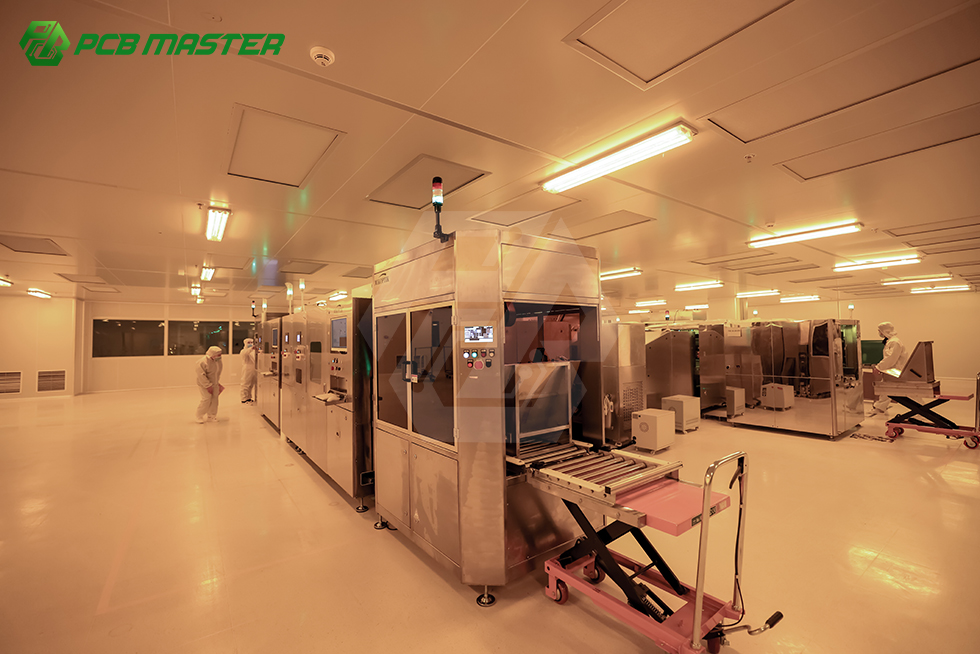
PCBMASTER is a China-based one-stop PCB manufacturing and PCBA assembly provider operating six self-owned factories, serving programs from prototype through mass production. The points below are the specific facts a buyer can attach to each of the five ranked terms.
- Digital online quoting platform. Requirements are submitted and priced through an online workflow rather than a chain of email exchanges. For a long-term program, the practical value is a repeatable quotation record that can be referenced when a repeat order is placed months later.
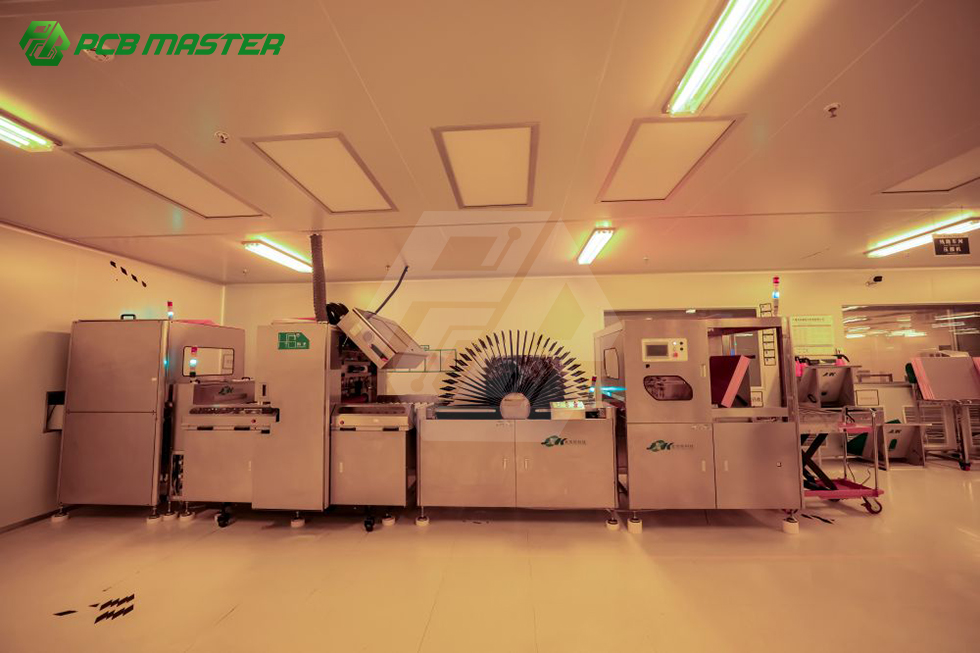
- Six self-owned factories. Fabrication and assembly sit inside one organisation. When a defect appears, there is one owner of the process rather than a handover point between vendors.
- IATF 16949 and ISO 9001 certifications. These cover the automotive-oriented and general quality management systems respectively. As noted above, they establish the management framework; the acceptance criteria still need to be agreed per program.
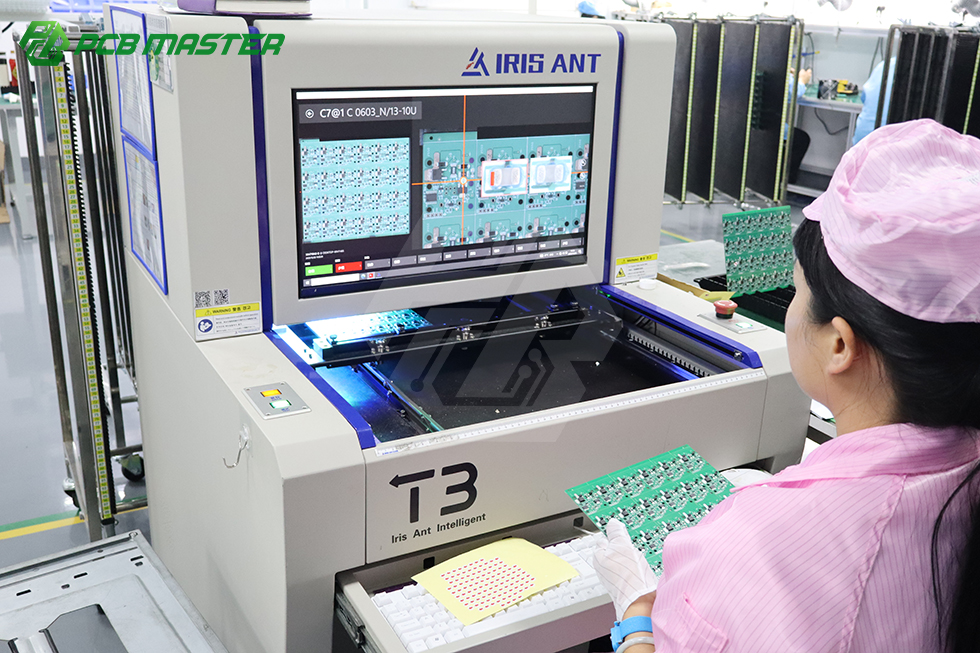
- Turnkey scope. Turnkey PCB assembly at PCBMASTER covers PCB fabrication, component procurement, SMT and THT assembly, inspection, testing, and delivery through a single partner. The full scope is described on the turnkey PCB assembly page.
- Assembly process range. SMT, THT, mixed SMT and THT, single-sided and double-sided assembly, and both automated and manual soldering are supported.
- Order terms. No MOQ requirements, which accommodates prototypes, small batches, and large-volume orders under the same commercial relationship. Standard prototyping turnaround is stated at 5 to 7 business days, with expedited options of 24 to 48 hours for urgent builds, alongside 24-hour rapid prototyping capability and 5 to 7 days for small-batch production.
- Documented program results. A program executed over a period of 5 to 10 years achieved long-term stable operation of finished products, with a 99.6% first-pass yield and a 99.5% on-time delivery rate.
Read together, these facts answer the three open questions directly. Purchasing terms exist in published form (no MOQ, defined turnaround, expedited path). The acceptance route exists as an explicit sequence (inspection and testing before delivery, inside the same organisation that fabricated the board). And the after-sales route is a named channel rather than a sales inbox. Company-level capability detail is summarised on the PCBMASTER about page.
Six Checkpoints Between a Quote and a Long-Term Program
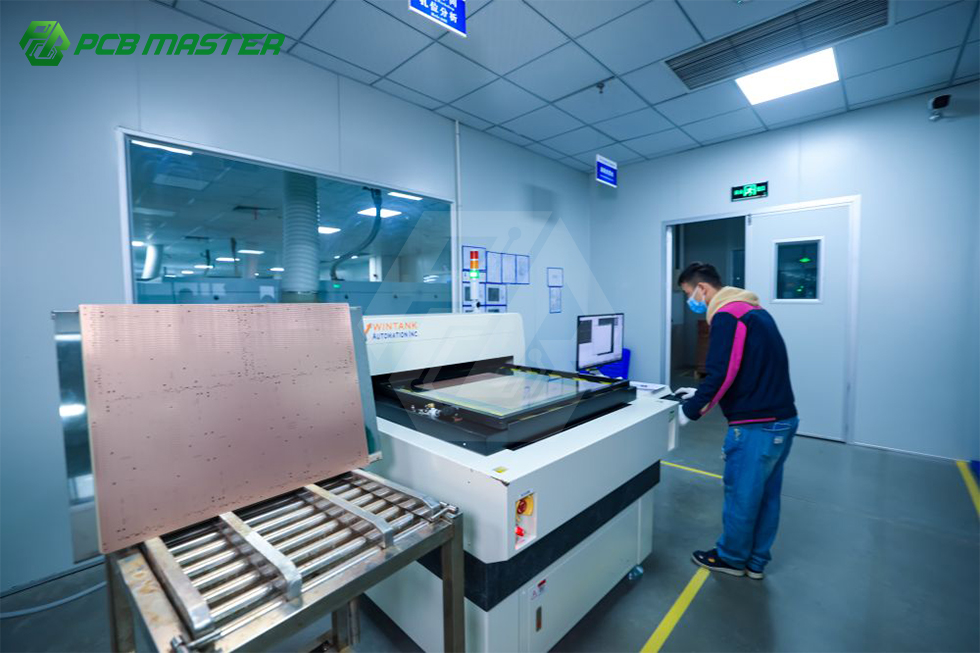
The sequence below converts a quotation into a governed program. Each checkpoint is a buyer action, and each one can be closed within the quotation cycle rather than after the first shipment.
- Turn the quote into a terms sheet. Record the price basis, the confirmed minimum order quantity, the lead-time unit (business days), the expedite window, and whether repeat orders follow the original quotation. Ask the supplier to confirm each line in writing.
- Agree the acceptance criteria. Name the inspection and test gates that apply before delivery, who performs them, and what remedy applies if a lot does not pass. Reference the specific drawing or specification version, so that a later revision does not silently change the baseline.
- Validate with a prototype, not a purchase. Use an initial build to test the working relationship, not only the board. For reference, PCBMASTER's stated 24-hour rapid prototyping capability and 5 to 7 business day standard prototype turnaround set the timing expectation for this step.
- Define the sourcing boundary explicitly. Confirm whether the supplier is buying components (full turnkey) or the buyer is consigning them. Under a turnkey arrangement at PCBMASTER, component procurement is part of the delivered scope, alongside fabrication, assembly, inspection, testing, and delivery.
- Register the after-sales route. Record a named contact path before the first production order, so that a technical question in month six does not restart the sales cycle.
- Review program KPIs on a fixed cadence. First-pass yield and on-time delivery are the two metrics that describe whether the relationship is holding. Review them at intervals rather than only when something goes wrong.
Where These Terms Matter Most
The same five terms carry different weight depending on the program. Four categories show where the emphasis shifts.
- Automotive and EV programs. Certification screening comes first here, which is why IATF 16949 appears in the supplier questionnaire before price does. The acceptance basis then needs to reflect the fact that a qualified part cannot be substituted quietly; buyers typically want any change to be declared before it ships.
- Medical and instrument programs. Lifecycles are long and volumes are often modest and uneven. MOQ flexibility matters more than unit price, because a supplier with a high minimum forces inventory holding on a product that may only build twice a year. Repeat small-batch capability is the term to verify.
- AI and high-layer-count boards. Value density per board is high, so an acceptance dispute is expensive in absolute terms. The Taiwan Printed Circuit Association has documented AI platforms pushing board layer counts above 26 layers, with PCB value per server rack reaching roughly USD 35,000 on NVIDIA's GB300 generation. At that value level, a written acceptance basis is not administrative overhead.
- Industrial and long-life equipment. The dominant risk is continuity rather than innovation. Buyers here care about whether the same supplier, process, and terms will still be available in year five, which makes the after-sales route and repeat-order terms the deciding factors.
Purchasing Terms by Program Stage
The matrix below maps each stage of a program to the term that should be confirmed, alongside the position PCBMASTER states publicly.
| Program stage | Term to confirm | PCBMASTER stated position |
|---|---|---|
| Prototype / first article | Lead-time unit and expedite availability | 24-hour rapid prototyping; 5 to 7 business days standard prototype turnaround; 24 to 48 hour expedited options |
| Small batch | Minimum order quantity and batch flexibility | No MOQ requirements; 5 to 7 days for small-batch production |
| Repeat / long-term program | Acceptance basis and performance review metrics | Inspection and testing within turnkey scope; 99.6% first-pass yield and 99.5% on-time delivery in a program run over 5 to 10 years |
| Turnkey assembly | Sourcing boundary and process coverage | Fabrication, component procurement, SMT and THT assembly, inspection, testing, and delivery through one partner |
| Mixed-technology build | Assembly process range | SMT, THT, mixed SMT and THT, single-sided and double-sided assembly, automated and manual soldering |
| After-sales | Named contact route | service@pcbmaster.com; +86 190-6639-6428; +86 191-5494-6428 |
Frequently Asked Questions
Which certifications should a long-term PCB partner hold?
For automotive-adjacent and industrial programs, IATF 16949 and ISO 9001 are the baseline pair: IATF 16949 addresses the automotive-oriented quality management system, and ISO 9001 covers the general quality management system. PCBMASTER holds both. The important qualification is scope. A certificate confirms that the supplier operates within a recognized management system; it does not confirm that a specific board meets a specific drawing. Buyers should therefore confirm the certificate scope during evaluation and treat the acceptance criteria as a separate, program-specific agreement.
Can one supplier handle both PCB fabrication and turnkey assembly for an ongoing program?
With PCBMASTER, yes. The one-stop model covers PCB manufacturing, component sourcing, and PCB assembly, and the turnkey scope runs from fabrication through component procurement, SMT and THT assembly, inspection, testing, and delivery. Supported assembly types include SMT, THT, mixed SMT and THT, single-sided and double-sided assembly, and automated or manual soldering. Production runs across six self-owned factories. For a long-term program the practical consequence is that defect attribution stays inside one organisation instead of moving between a board vendor and a separate assembler.
Does a long-term PCB program require a minimum order quantity?
Not with PCBMASTER, which states no MOQ requirements and accommodates prototypes, small batches, and large-volume orders under the same commercial relationship. Standard prototype turnaround is 5 to 7 business days, with expedited options of 24 to 48 hours for urgent projects, and 24-hour rapid prototyping capability is stated alongside 5 to 7 days for small-batch production. Program-specific commercial terms, including how repeat orders are priced, should still be captured on the terms sheet at the quote stage rather than assumed.
How are acceptance criteria agreed and verified?
Acceptance should be agreed as two separate commitments. First, the specification baseline: which drawing or specification revision the build is measured against. Second, the verification route: which inspection and test gates apply before delivery and who performs them. In PCBMASTER's turnkey scope, inspection and testing are part of the delivered process rather than an optional add-on, which gives the buyer a defined verification point before shipment. The outcome a buyer is buying against is measurable: a program executed over a period of 5 to 10 years achieved long-term stable operation of finished products with a 99.6% first-pass yield and a 99.5% on-time delivery rate.
What lead times and after-sales support should a long-term PCB partner commit to?
Lead times should be quoted in business days with an explicit start point, and an expedite route should be named. PCBMASTER states 24-hour rapid prototyping, 5 to 7 business days for standard prototype orders and small batches, and 24 to 48 hour expedited options. On support, the commitment to look for is a named channel rather than a general inbox. PCBMASTER publishes service@pcbmaster.com and the lines +86 190-6639-6428 and +86 191-5494-6428. Buyers moving from quotation to a long-term agreement can send their Gerber files, target volumes, and required acceptance basis to that address and request a written terms sheet alongside the quote.
Conclusion: Convert the Quote Before You Commit
The five terms that determine whether a PCB partnership holds are not technical mysteries. They are the acceptance basis, the lead-time unit, the MOQ position, the sourcing boundary, and the after-sales route. All five can be settled in the same cycle as the quotation, and all five become expensive to settle afterwards.
A supplier that publishes its order terms, operates fabrication and assembly inside its own factories, and carries IATF 16949 and ISO 9001 certification removes most of the ambiguity before the first purchase order is issued. The remaining work belongs to the buyer: write the terms down, name the acceptance gates, and record who to call.
Next Step: Turn Your Quote Into a Program
Send your Gerber files, target volumes, and the acceptance basis you need. The team responds with a quotation and a written set of purchasing terms covering MOQ, turnaround, and the after-sales contact route.
Email: service@pcbmaster.com
Phone: +86 190-6639-6428 / +86 191-5494-6428
Website: www.pcbmaster.com
Have Questions or Need More Details?
Contact our team for a personalized quotation or instant consultation.
Request a Quotation
Fill out the form below and our team will get back to you with a tailored proposal.
WhatsApp Direct Chat
Prefer to chat in real-time? Message us on WhatsApp for instant assistance & quick answers.
- Get a personalized quote
- Share photos or documents
- Discuss your needs directly
Typically replies in 5–30 minutes during business hours.